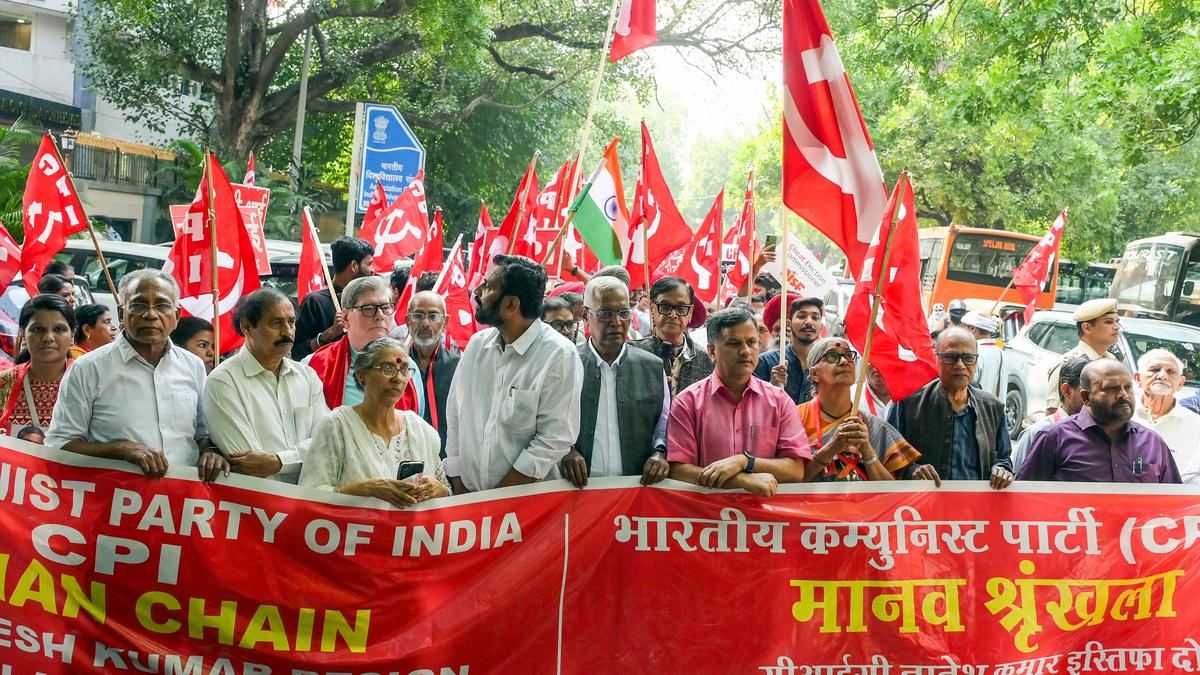
The Communist Party of India (CPI) organized a human chain in Delhi to protest the continuation of the Chief Election Commissioner (CEC) and to demand the rollback of the SIR. The protest was aimed at highlighting concerns over the credibility of the electoral process.
Key Developments
The CPI gathered on the streets of Delhi, forming a continuous human chain to draw attention to the issue. Party general secretary D. Raja voiced his concerns, stating that the CEC had "lost the confidence of the people" and that his continued tenure posed a threat to the integrity of elections.
"Mr. Kumar had lost the confidence of the people and his continuation as Chief Election Commissioner posed a threat to the credibility of the electoral process," said D. Raja.
Background & Context
The SIR, or the Schedule of Important Rules, has been a subject of debate among political parties. Critics argue that the current regulations undermine the fairness and transparency of the electoral process. The CPI’s protest reflects a broader call from opposition parties to reassess the CEC’s mandate and the policies that govern elections.
Impact & Analysis
- The human chain draws national attention to the CEC’s performance and the SIR.
- It may influence public discourse and pressure the Election Commission to review its policies.
- The protest could prompt the government to address concerns regarding electoral credibility.
What Happens Next
The CPI is expected to file formal complaints with the Election Commission and may seek a judicial review of the SIR. Further protests or public meetings could be scheduled if the CEC does not respond to the demands.