Overview
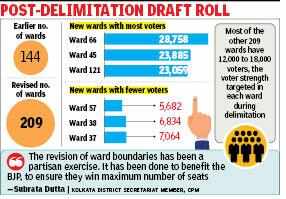
The Kolkata Municipal Corporation (KMC) has released a revised ward list that reflects recent population shifts across the city. According to the new delineation, eight wards boast more than 20,000 registered voters, whereas twelve wards fall below the 10,000‑voter threshold. This adjustment follows a systematic review of demographic data to ensure equitable representation for Kolkata’s residents.
Key Developments
- Population‑based redrawing: The new boundaries were drawn using the latest census figures and voter registration records.
- Voter distribution: 8 wards now exceed 20,000 voters; 12 wards have fewer than 10,000 voters.
- Objective: To reduce disparities in voter density across wards and improve the fairness of municipal elections.
Background & Context
Kolkata’s municipal elections have historically faced criticism over uneven voter representation. Older ward boundaries often did not account for rapid population growth in certain neighbourhoods, leading to over‑represented and under‑represented areas. The KMC’s decision to redraft wards follows a broader national trend of revising electoral maps to align with demographic realities.
Impact & Analysis
- For voters: Residents may find themselves in new wards with different polling booths and local representatives.
- For candidates: Political parties will need to adjust campaign strategies to target newly defined voter bases.
- For the city: A more balanced electorate could lead to fairer allocation of municipal resources and services.
What Happens Next
- Official gazette: The revised ward list will be published in the government gazette within the next fortnight.
- Election commission review: The Election Commission of India will vet the changes before the upcoming municipal polls.
- Public consultation: Residents will have an opportunity to file objections or suggestions through the KMC portal.